A Pantry-First Menu for a Rainy Afternoon
A pantry-first menu turns one familiar staple into a relaxed rainy-day meal, with flexible courses, ordinary kitchen tools and a plan that welcomes swaps.
What can you make for a rainy afternoon when the cupboard is more promising than the fridge? A pantry-first menu starts with one dependable staple—perhaps chickpeas, rice, pasta or tinned tomatoes—and lets the rest of the meal gather around it. The aim is not to produce a grand spread; it is to give a few simple dishes a shared thread, with room for what is already on hand.
Which staple should anchor the meal?
Choose a pantry staple that can take more than one form, rather than one that has a single obvious use. Chickpeas can become a warm bowl, a crisp-edged topping or part of a dip; rice can accompany a main dish or turn into a soft pudding. Pasta is easy to serve in a substantial course, while tinned tomatoes can bind beans, vegetables or a quick soup.
Think about the mood and the people eating. If everyone wants something filling, rice, pasta or beans can carry the centre of the meal. If the food is meant for grazing while rain taps at the windows, a tin of chickpeas or a jar of olives may be a better starting point, since small portions can be set out alongside bread or crackers.
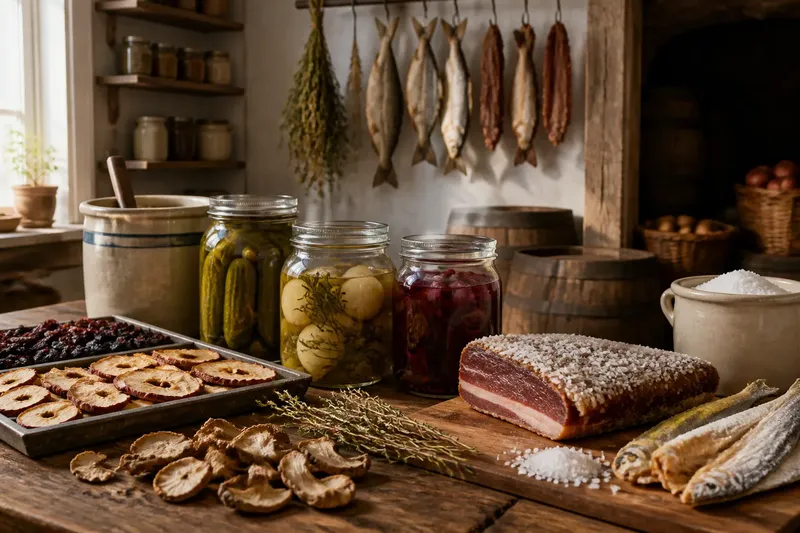
Before choosing, scan the cupboard for the ingredients that naturally accompany the staple: oil, vinegar, stock cubes, mustard, spices, canned fish, nuts, dried fruit or preserved vegetables. A useful anchor should connect to several things you have, not force a special shopping trip. If the cupboard offers little beyond the staple, let that be the meal’s main dish and keep the other courses modest.
How many courses feel relaxed?
Two or three small courses are usually enough to make an indoor lunch or early supper feel considered without turning the afternoon into a kitchen shift. A simple shape is a nibble to begin, a warm main dish, then something sweet or a cup of tea. A course can be as uncomplicated as sliced apple beside a handful of salted nuts.
Give each course a different job. The first should be ready before anyone sits down, the main should satisfy, and the last should bring the meal to a gentle close. That distinction matters more than the number of dishes. Three bowls of hot food can feel like work; a jar of olives, a one-pot supper and biscuits with tea may feel generous.
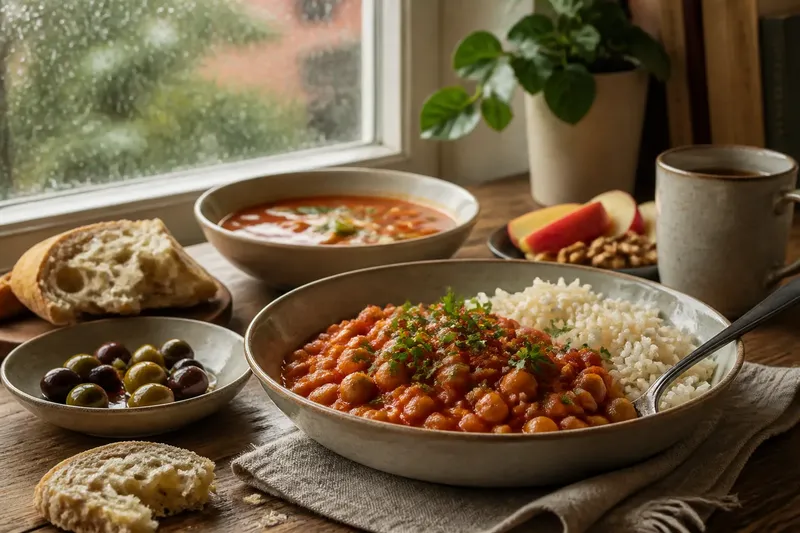
Say you have chickpeas, a little rice, tinned tomatoes, onion, bread and a jar of olives. You could put the olives and torn bread on the table first, simmer the chickpeas with onion and tomatoes while the rice cooks, then finish with a piece of fruit or tea. The chickpeas tie the meal together, but no course needs to repeat the same flavour or texture.
What can become a first course?
Start with something that asks little of the hob. Crackers with tinned fish, olives, pickles, a bowl of nuts, or bread with oil and vinegar can all set out a welcome while the main dish cooks. If you have fresh produce, add sliced cucumber, carrot or apple; a raw, crisp bite brings contrast to a meal built mostly from cupboard food.
A small soup works when you have a little more time. Use stock, tinned tomatoes or beans as a base, then add leftover cooked vegetables, a handful of pasta or rice, and seasoning. Keep the portion modest so it opens the appetite rather than competing with the main.
There is no need to make every starter from scratch. A pantry-first meal is a chance to notice which ready-to-eat foods are already useful, not a test of domestic virtue. If you have only one suitable opener, put it out and move on.
How should the staple become the main?
Choose a cooking method that suits the staple and the equipment you have: a saucepan, frying pan, baking dish or even a serving bowl may be enough. Rice and pasta can form the base of a dish; beans and chickpeas can be warmed with tomatoes, stock or spices; tinned tomatoes can turn into a sauce for whatever grain or bread is available.
Build flavour in layers, but keep the choices few. Onion or garlic, if available, gives a savoury start; dried spices or herbs can deepen it; vinegar, lemon juice or pickle brine can brighten the finished dish. Add a texture contrast when possible: toasted breadcrumbs, chopped nuts, seeds or a crisp piece of bread.
For a flexible main, make the central mixture slightly saucy and serve it with a separate base. That lets people combine the food to their liking and makes substitutions simple: rice can stand in for pasta, bread can take the place of either, and beans can join vegetables without demanding a precise recipe. Use the method and timing on ingredient labels where relevant, and follow any applicable local food-safety guidance.
What can replace an ingredient?
Replace ingredients by function, not by trying to find an exact twin. If you lack a particular bean, use another cooked bean or chickpeas; if there is no fresh onion, try a little dried onion or leave it out. A missing herb is rarely a reason to abandon a dish: a pinch of spice, a spoonful of mustard or a sharp condiment may supply a different but useful note.
For the base, choose what is convenient rather than what a recipe names. Couscous, rice, pasta, potatoes and bread can all serve as a landing place for a savoury topping, though their texture and flavour will differ. Adjust the moisture as you go: a thick bean mixture may need a splash of water or stock, while a loose sauce may need time to simmer.
Keep dietary needs and preferences in view when making swaps. A dish containing fish, dairy, nuts or gluten may not suit everyone at the table, so offer a plain alternative or keep those ingredients separate when that is manageable. When a safety question depends on a product label or local rules, follow the relevant guidance rather than guessing.
What can finish the meal?
A sweet course does not need to involve baking. Tinned fruit, dried fruit and nuts, biscuits, chocolate, or sliced fresh fruit can all work beside tea or coffee. If you have yoghurt, spoon it over fruit; if not, serve the fruit on its own. The small ritual of clearing the savoury dishes and bringing out a different plate can make even a simple ending feel distinct.
If the cupboard holds oats, flour or semolina, a quick pudding may be possible, but only choose it if it feels easy. A saucepan and spoon are sufficient for many soft puddings; a bowl and kettle can make a warm drink to accompany something ready-made. The point is a satisfying finish, not a second main event.
What do readers ask?
Can a pantry-first menu include fresh food?
Yes. Pantry-first means choosing the anchor from the cupboard, not excluding everything fresh. Use a lemon, leafy greens, a carrot or an apple to add brightness, crunch or a clean finish.
What if I have no matching ingredients?
Keep the staple as the main event and serve it with a plain, compatible base such as bread, rice or potatoes. A small starter and a simple fruit or biscuit finish can complete the meal without forcing unrelated foods into one dish.
Can I prepare the menu without an oven?
Yes. A saucepan and frying pan cover many pantry meals, and a no-cook opener can be arranged while the main simmers. Choose one-pot cooking if you want fewer dishes to wash.
What is not worth making from scratch?
There is little value in baking bread, making elaborate stock or preparing several separate condiments solely to make a casual meal feel complete. Use what is ready to eat, and spend your attention on getting the main dish seasoned and served comfortably.
How can the afternoon stay easy?
Set out the opening nibble before cooking, then choose a main that can wait briefly without losing its appeal. A stew, soup or saucy bean dish is forgiving; delicate fried foods tend to demand attention at the exact moment people are arriving. Keep one serving bowl and the everyday cutlery ready, and let people help themselves if that suits the gathering.
For a pantry-first menu, the best decision is often to stop adding dishes once the meal has a clear beginning, a satisfying centre and a pleasant ending. Rain can make a kitchen feel close and busy, so leave the counter clear enough to work and let the food arrive in its own time. A familiar staple, thoughtfully paired with what is at hand, is plenty of occasion for an afternoon indoors.