Fresh, Dried or Frozen Herbs: What Changes in the Pot?
Fresh, dried or frozen herbs behave differently in the pot. Learn how texture, flavour and cooking time can help you choose the right form.
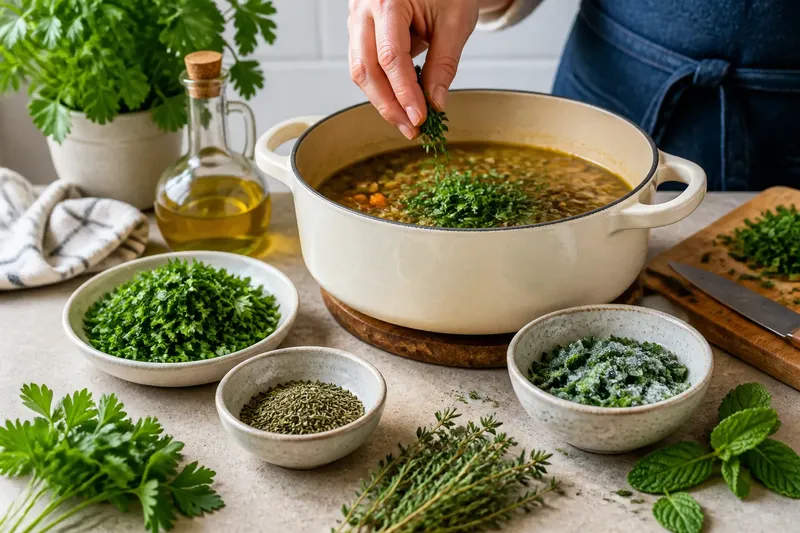
Fresh, dried or frozen herbs can make the same soup taste bright, savoury or pleasantly deep, depending on when they meet the heat. The useful question is not which form is best, but what the dish needs: visible leaves, concentrated aroma or flavour that can simmer into the background.
Here are five ways to choose. For any particular herb, follow the packet or producer’s guidance where it applies, since drying and freezing methods vary.
1. Fresh herbs bring lift
Fresh parsley, coriander, mint and basil carry moisture as well as aromatic oils. Their leaves often keep a distinct, lively character when chopped shortly before serving, which makes them natural partners for salads, sauces, sandwiches and finished soups.
Heat and prolonged cooking soften their colour and texture, and can flatten the qualities that make them noticeable. Add delicate leaves near the end, or scatter them over the dish after it leaves the hob. Sturdier fresh herbs, such as rosemary and thyme, can go in earlier: their woody stems and firmer leaves cope better with a simmer.
Think about the leaf itself, not only the flavour. A spoonful of chopped parsley gives a stew green flecks and a fresh finish; finely chopped rosemary contributes flavour but can feel twiggy if the pieces are large. Strip woody leaves from their stems and chop them finely, while tender herbs can often be sliced or torn more generously.
2. Dried herbs deepen slowly
Drying removes most of an herb’s water, leaving a compact form whose aroma can seem more concentrated by spoonful than its fresh counterpart. The dried leaves need time and moisture to soften and release that aroma, so they suit sauces, braises, bean dishes and soups that cook for a while.
Stir dried thyme or oregano into oil, softened onions or a simmering sauce early enough for its flavour to mingle with the other ingredients. Sprinkling dried leaves over a finished salad is less likely to give the same rounded result: the texture can stay papery, and the aroma may remain tucked inside the leaf.
Crush a pinch between your fingers before adding it. If it smells fragrant, it is ready to contribute; if the aroma is faint or dusty, adding more may bring more leafiness than flavour. Keep dried herbs sealed away from heat, light and steam, and judge their usefulness by aroma rather than by the calendar.
3. Frozen herbs keep softness
Frozen herbs sit between the fresh and dried forms. Freezing preserves moisture, but ice crystals damage the leaves’ structure, so thawed herbs tend to be soft or limp rather than crisp. They can still lend a recognisable herbal flavour to food, even when they no longer look like a fresh garnish.
Use frozen chopped parsley, coriander or dill in a hot soup, stew, sauce or filling, where their softened texture blends in. Many products can go straight from the freezer into the pan; if a pack suggests thawing or draining, follow its directions. Once opened, keep the herbs cold and return them promptly to the freezer rather than leaving the pack beside a warm hob.
Frozen herbs are less suited to dishes where whole, perky leaves are part of the appeal. A spoonful stirred into a yoghurt sauce may work if a soft green fleck is welcome, but fresh mint or parsley is the better choice when the leaf needs to look and feel crisp.
4. Match timing to the dish
Timing is the main distinction at the cooker. Fresh tender herbs usually do best at the finish; dried herbs benefit from time in moist heat; frozen herbs can be added during cooking or near the end, depending on whether you want their flavour infused or still distinct.
- Salad dressing: choose fresh chives, parsley or tarragon for visible flecks and a clean, immediate aroma.
- Long-cooked tomato sauce: add dried oregano or thyme early, then taste near the end before deciding whether it needs a fresh finishing herb.
- Quick pan sauce: stir in fresh chopped parsley or chives after turning off the heat, so the leaves retain some colour.
- Soup from the freezer: frozen dill or parsley can be stirred in as the soup warms, with a fresh squeeze of lemon if the flavour needs lifting.
- Slow beans: a woody fresh herb or dried leaves can simmer with the beans; reserve tender leaves for serving.
These are starting points, not rigid rules. If a dish is cooking briefly, a dried leaf may not have enough time to soften; if it is simmering for ages, delicate fresh leaves may lose their character. Add a small amount, taste, and adjust while there is still time for the flavours to settle.
5. Choose by texture and job
Ask what the herb is meant to do. If it should be seen and felt, use fresh leaves. If it should quietly flavour the whole pot, dried herbs are often convenient. If you want chopped herbs ready for a cooked dish without washing and trimming a bunch, frozen herbs can be a useful middle ground.
Imagine you are making a quick lentil soup from tinned lentils, onion and stock. Add dried thyme with the onion so it has time to soften in the hot oil and broth; stir frozen parsley through just before serving for green, soft flecks. If you want a crisp, bright finish instead, chop fresh parsley and add it at the table.
It is not worth trying to make frozen herbs look like fresh garnish, or crushing a large quantity of dried leaves into a dish simply because they seem mild at first. Texture has its own vote: a few visible leaves can be welcome, while a mouthful of tough stems or dry flakes can distract from an otherwise balanced meal.
Herb choices answered?
Can fresh herbs replace dried herbs?
Often, but not by swapping spoonful for spoonful: fresh herbs contain water and take up more space, while dried herbs are compact and concentrated. Start with a modest amount of chopped fresh herb, then taste and add more if the dish needs it.
When should dried herbs go into a dish?
Add them early enough to soften and release their aroma in moisture, such as when onions are cooking or a sauce begins to simmer. For a dish that cooks only briefly, crush the leaves and give them a little time in warm oil or liquid rather than leaving them dry on top.
Can frozen herbs be used as a garnish?
They can add green colour, but thawed leaves are usually soft, so they will not provide the crisp texture of fresh herbs. Use frozen herbs where the leaf can blend into the dish, and reach for fresh leaves when appearance and bite matter.
Which form works best in a cold dish?
Fresh herbs are generally the easiest choice for salads, uncooked sauces and cold dips because their leaves keep more structure. Dried herbs can work in a dressing if they have time to soften, while frozen herbs suit cold mixtures only when their softer texture fits.
For fresh, dried or frozen herbs, let the dish decide: garnish calls for leaves with structure, a slow pot welcomes herbs that can steep, and a busy evening may favour a ready-to-use frozen handful. That small choice changes not just how the pot smells, but what each bite feels like.