What Happens When Sugar Meets Heat
What happens when sugar meets heat? Learn how temperature and timing shape caramel’s flavour, colour and texture, and how to troubleshoot common problems.
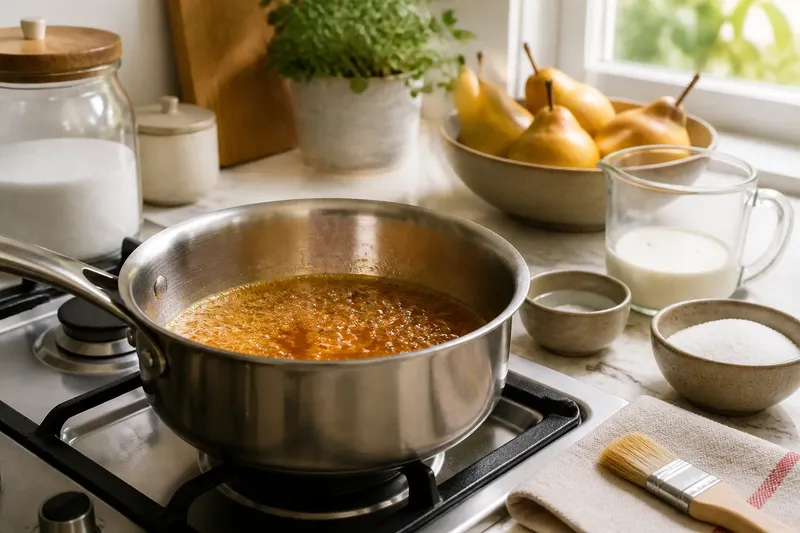
Why does a pan of sugar turn from clear syrup to dark, bitter caramel so quickly? What happens when sugar meets heat depends on how much water is present, how evenly the pan warms and how long the sugar stays hot. Those changes shape flavour, colour and texture, but they also explain the familiar stumbles: graininess, hard lumps, scorching and caramel that sets before it reaches the plate.
How sugar changes
In a wet caramel, sugar first dissolves in water to make a syrup. As heating drives off water, the syrup grows more concentrated and its boiling temperature rises. Once enough water has gone, the sugar’s own molecules begin to break down and recombine, producing caramel’s toasted aromas and amber colour. This is caramelisation, not the same process as browning caused by proteins.
There is no single magic temperature that describes every pan. A thermometer can help you track a syrup, but the result also depends on the recipe, the pan, the heat and how quickly the mixture cools. Colour is a useful clue: pale gold tends to taste mild and sweet, while deeper amber brings stronger toasted notes. Push further and the flavour can turn sharply bitter.
Caramel changes quickly near the end because a hot syrup continues cooking after you lift it from the hob. A heavy-based saucepan holds heat, so removing it at the exact shade you want may still carry it darker. Taking the pan off a little earlier, then adding any planned liquid carefully, can help account for that carry-over heat.
Grainy caramel causes
Coarse crystals often appear when sugar crystals cling to the pan’s side and fall back into the syrup. A stray grain can encourage nearby dissolved sugar to crystallise too, leaving the mixture cloudy and sandy instead of smooth. Stirring a wet caramel once the sugar has dissolved can also disturb it enough to start this process.
For a wet method, combine the sugar and water before heating, then let the syrup bubble without stirring. If sugar crystals remain above the syrup line, brush the inside of the pan with a clean pastry brush dipped in water. A lid placed over the pan briefly can also let steam wash crystals from the sides; remove it carefully and keep your face clear of the steam.
Dry caramel, made by heating sugar without added water, can avoid some syrup-related problems but demands close attention. Add the sugar in an even layer to a clean, dry pan over moderate heat. As the edges melt, gently tilt and rotate the pan to encourage even melting; avoid stirring with a spoon while dry crystals remain.
If the syrup has already turned grainy, adding water and reheating may dissolve the crystals, but it also sends the process back to its syrup stage. That is a reasonable rescue when there is time and the mixture has not scorched. If it smells burnt, do not try to cover the flavour with cream or extra sugar; start again with a clean pan.
Uneven colour and scorch
One side amber, the other pale? A thin pan, a burner that heats unevenly or a pan that is too wide for the flame can leave hot spots. A heavy-based, light-coloured saucepan makes it easier to judge the syrup’s colour and spreads heat more evenly than a flimsy pan. Choose a burner that warms the base without licking up its sides.
Use moderate heat rather than trying to hurry the syrup with a fierce flame. Once the mixture begins to colour, watch it closely and gently swirl the pan if the colour is developing unevenly. Do not leave it to fetch a bowl or answer a message: the change from amber to acrid can happen while attention is elsewhere.
If you see a wisp of smoke or smell a harsh, burnt aroma, take the pan off the heat at once. A very dark syrup may be bitter throughout, even if a few spots still look attractive. Let it cool somewhere safe before dealing with it; hot caramel can cling to skin and cause severe burns.
Hard lumps in the pan
When liquid meets hot caramel, the sugar can seize into a solid-looking mass. The sudden temperature change makes the syrup thicken and harden before the liquid has incorporated. This is alarming but does not always mean the batch is lost: with gentle, continued heating, the lump may dissolve into the liquid.
For caramel sauce, warm the cream or other liquid separately before adding it gradually, and expect vigorous bubbling as steam escapes. Keep hands and face back from the pan, and use a long-handled spoon only when it is safe to stir. If the caramel has seized, return it to low heat and give it time to melt; forceful boiling can scorch the sauce before the lump disappears.
Some recipes intentionally add cool liquid, so follow the method given rather than changing every ingredient by habit. The liquid’s temperature and the amount added affect how quickly the pan reacts. If a sauce remains lumpy after gentle reheating, strain it once it is safe to handle, rather than scraping burnt fragments into the finished sauce.
Texture after cooling
Caramel’s final texture is shaped by water as much as by colour. A thin, concentrated syrup cools into hard candy; adding cream, butter or another liquid makes a softer sauce, though the proportions and cooking stage still matter. A caramel that seems fluid in the pan may set firmly on a cold spoon or plate.
If a sauce turns too stiff, it may have cooked until too much water evaporated. Rewarm it gently and stir in a little warm liquid, if the recipe permits, until it loosens. If it stays thin, it may need more evaporation; return it to gentle heat and watch closely, since a small change in concentration can shift the cooled texture.
Crystals can also form after the sauce cools, especially if the mixture was stirred or disturbed while crystallisation was possible. A smooth sauce is easier to maintain if the pan and utensils are clean and the finished caramel is not scraped with a sugary spoon. Once cooled, store it in a clean container suited to the recipe and rewarm it gently when needed.
Which method fits?
Choose wet caramel when you want a syrup that gives you time to monitor the colour and are comfortable managing crystallisation. Choose dry caramel when you want to avoid added water and can watch the pan closely as the sugar melts. Neither method is automatically foolproof: the best choice is the one that suits the recipe and the attention you can give it.
Say you are making a sauce for poached pears and want a gentle, rounded caramel flavour. You could use a wet method, let the syrup colour gradually to pale amber, remove the pan before it reaches your preferred shade, then add warmed cream carefully; the expected result is a softer, less bitter sauce than one cooked to deep brown. For a brittle topping, by contrast, the recipe may call for a more concentrated caramel that sets hard as it cools.
Not worth the effort: repeatedly dipping a spoon into hot syrup to judge its colour. Each sample can cool unpredictably, and handling it adds a burn risk. Watch the pan against a light background instead, and use a thermometer only when the recipe depends on a particular syrup stage.
When should I stir caramel?
With wet caramel, stir only at the beginning to help the sugar dissolve, then leave the syrup alone as it boils. With dry caramel, tilt or swirl the pan to spread the melting sugar rather than stirring through dry crystals.
Why did my caramel turn bitter?
It likely stayed hot too long or reached a colour beyond the flavour you wanted. Remove the pan earlier next time, remembering that residual heat continues darkening the caramel.
Can I fix crystallised sugar?
If it has not scorched, add water and reheat gently until the crystals dissolve, then cook it again without stirring. A burnt smell or dark, acrid taste is a sign to discard it rather than mask it.
Why did the cream make caramel seize?
The cooler liquid caused the hot sugar to harden abruptly, and the pan may also have bubbled vigorously as water turned to steam. Warm the liquid first and add it gradually; if a lump forms, gentle reheating can often dissolve it.
Read the pan closely
Temperature and timing are useful only when paired with what you can see and smell. A thermometer can identify a syrup stage, while the colour tells you how far the caramel’s flavour has developed; neither replaces attention as the pan approaches its target. For caramel, the last moments matter more than the long stretch of bubbling before them.
Keep the pan handle turned in, clear a safe place for it before heating and have the recipe’s additions ready. Caramel is far easier to manage when you are not searching for cream while the sugar darkens. The question of what happens when sugar meets heat then becomes practical: watch its changing colour, respect the stored heat and choose the texture the finished dish needs.